
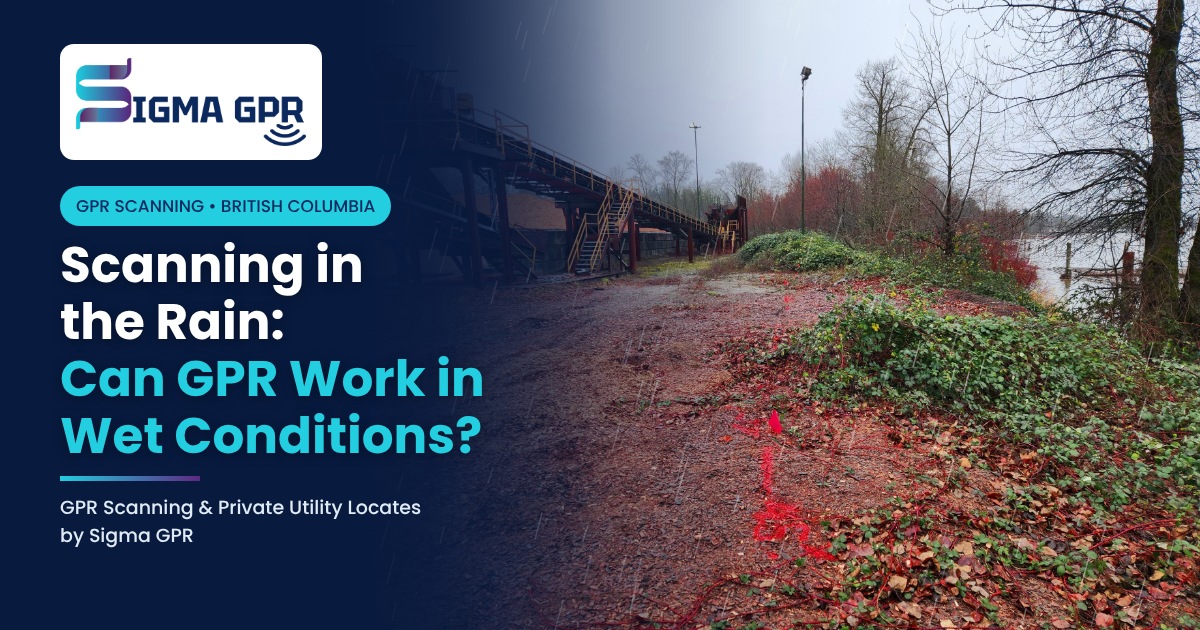
Can GPR work in the rain? Yes, in most cases. Ground penetrating radar works through wet concrete and damp ground every day on BC job sites. But water does change how radar signals travel, so heavy rain, standing water and saturated soil can reduce how deep and how clearly we see.
Here is what rain really does to a GPR scan, when we can work through it, and when it’s better to wait.
How water affects GPR
GPR sends radio waves into the material and reads the reflections. Water changes two things:
- Speed. Radar travels slower through wet material. We calibrate for this on site so depths stay accurate.
- Strength. Water, especially with salts or clay, absorbs part of the signal. The wetter and more conductive the material, the less depth we can reach.
In short, rain doesn’t stop GPR. It can limit depth and clarity, and we adjust the method to match.
Concrete scanning in wet weather
Condition | Effect on the scan | What we do |
|---|---|---|
Indoor slab, parkade or covered area | None from the rain | Scan as normal |
Light rain on an outdoor slab | Little effect | Scan as normal, protect the equipment |
Standing water on the surface | Blurs the shallow signal | Squeegee or sweep the area dry first |
Freshly poured or very wet concrete | Less depth and clarity | Allow drying time, or scan with extra passes |
Heavy, continuous rain outdoors | Harder to mark and photograph | Cover the area or reschedule |
Most concrete scans happen indoors or in parkades, so rain rarely stops them.
Utility locating in wet ground
Wet soil affects GPR more than wet concrete does.
- Damp sand and gravel: usually fine. Depth may drop a little.
- Saturated clay: absorbs radar strongly. GPR may only see shallow lines.
- Standing water or puddles: the surface reflection hides what is just below.
That’s why we don’t rely on GPR alone outdoors. Electromagnetic locators trace metallic lines and tracer wire through wet ground without losing signal. Using both methods, we can locate through most fall and winter weather in the Lower Mainland.
When it’s better to wait
We’ll recommend rescheduling when:
- The scan area is under water and can’t be drained or swept
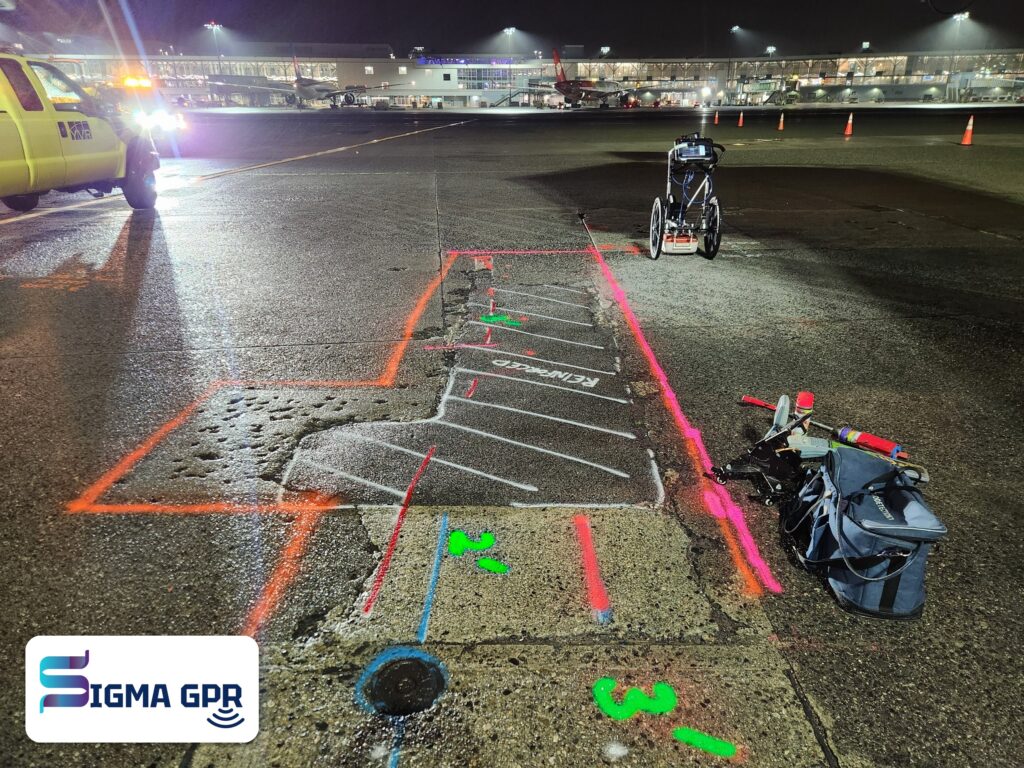
- Heavy rain will wash away paint marks before your crew can dig
- The concrete was poured very recently and is still saturated
- Conditions are unsafe for the technician, such as flooding or lightning
If weather is a concern, we’ll call you before we drive out.
How to keep a rainy-day scan on track
- Clear standing water from the scan area before we arrive.
- Provide a covered spot or tarp for outdoor work if possible.
- Book the locate as close to your dig date as you can, so rain has less time to fade the marks.
- Photograph the marks the same day.
- Ask about flags and stakes on soft ground, where paint won’t hold.
For more on protecting marks through the wet season, read Fall and Winter Utility Locates: Rain, Leaves and Faded Marks.
Frequently asked questions
Will you cancel my scan if it rains? Not for normal rain. Most scans go ahead. We only reschedule if water or safety prevents a reliable result.
Are results less accurate in the rain? Positions stay accurate. In very wet ground the maximum depth we can see may be reduced, and we’ll tell you if that affects your job.
Can you scan right after a pour? It’s better to wait. Fresh concrete holds a lot of water. Ask us about timing for your slab.
Does rain affect indoor scans? No, unless water is leaking onto the slab.
Book your scan, rain or shine
Sigma GPR provides concrete scanning and utility locating across Metro Vancouver, the Fraser Valley and the rest of BC, all year round.
Book a scan or call (778) 302-0868.