
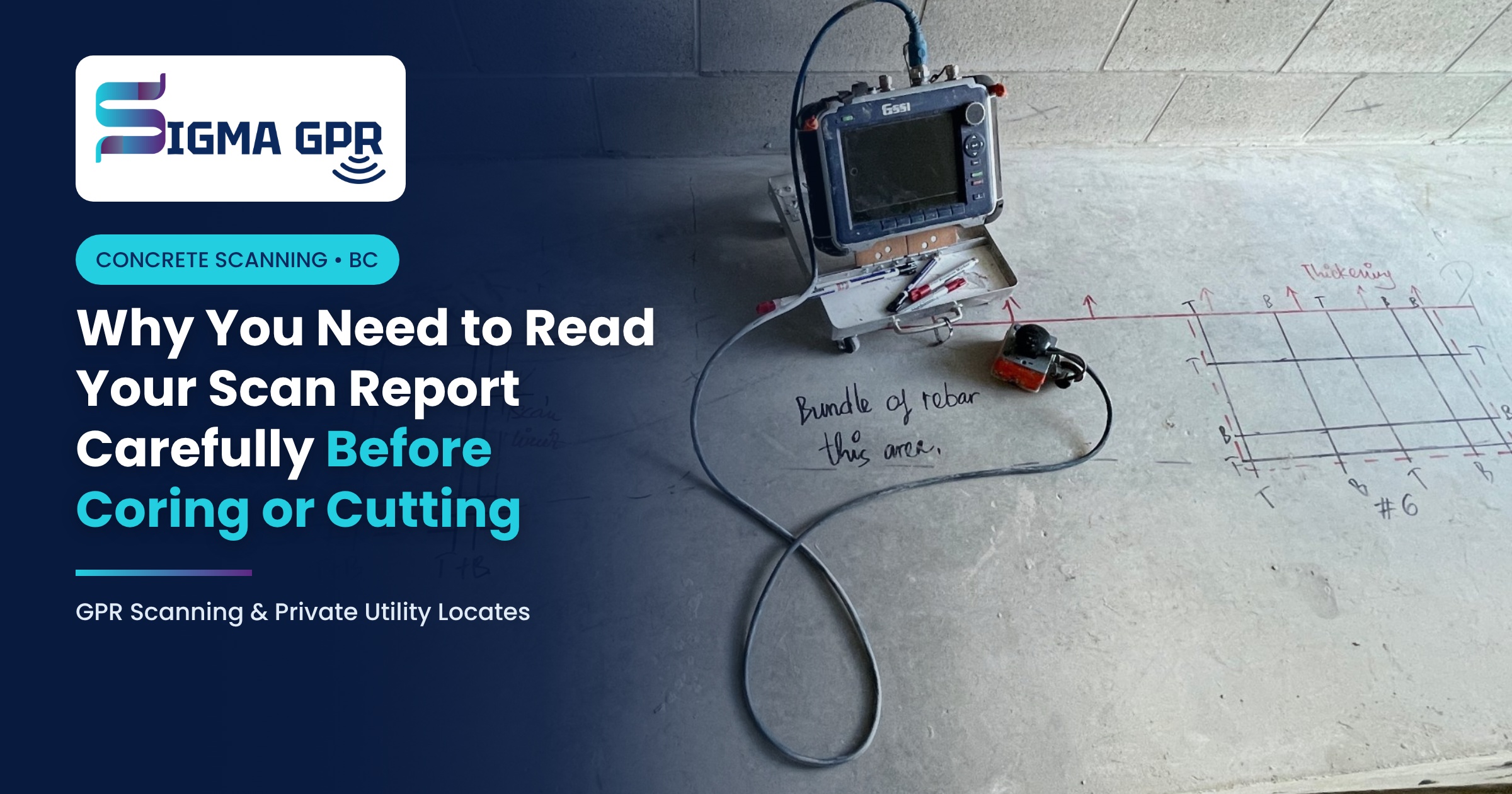
A concrete scan report only protects your crew if someone reads it, understands it and passes it on. Most strikes after a scan don’t happen…
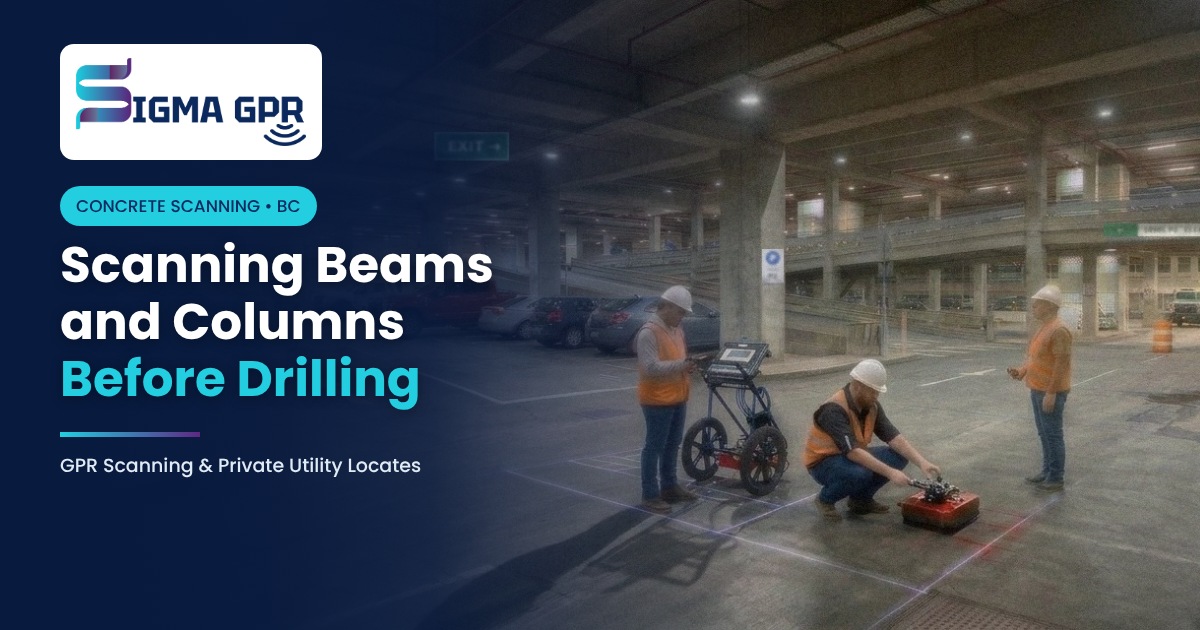
Concrete Scanning: Scanning Beams and Columns Before Drilling
Beams and columns carry the loads that hold a building up. Drilling or coring into them without knowing what is inside is one of the…
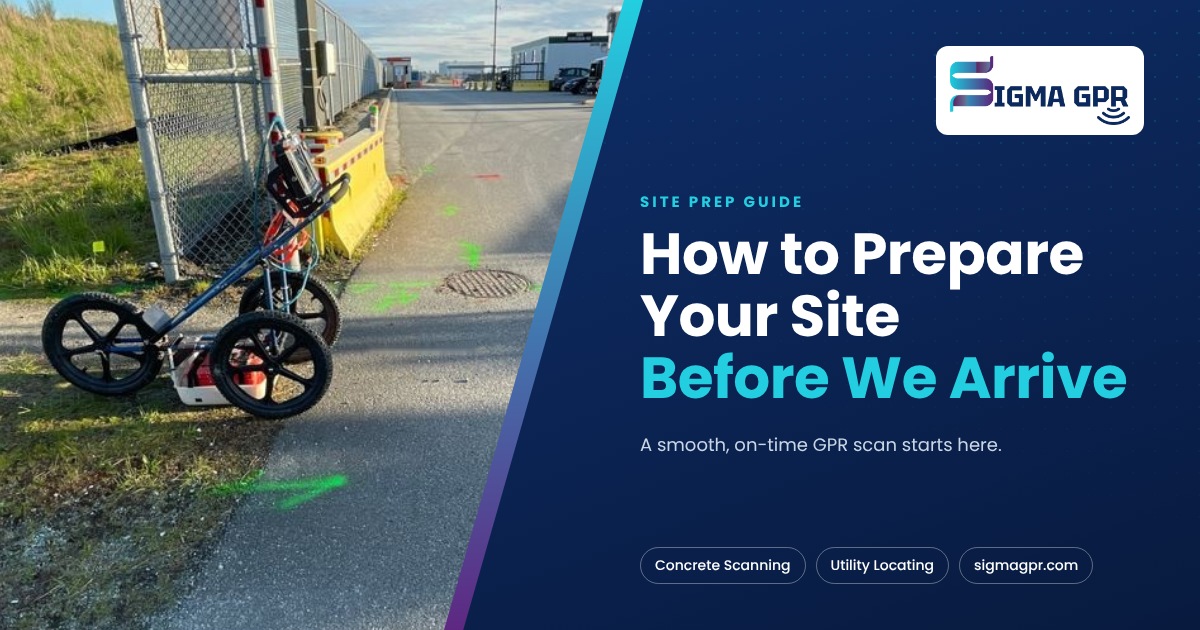
GPR scan: How to Prepare Your Site Before We Arrive
A little preparation makes a big difference. When you prepare your site for a GPR scan or utility locate, our technician can start scanning the…
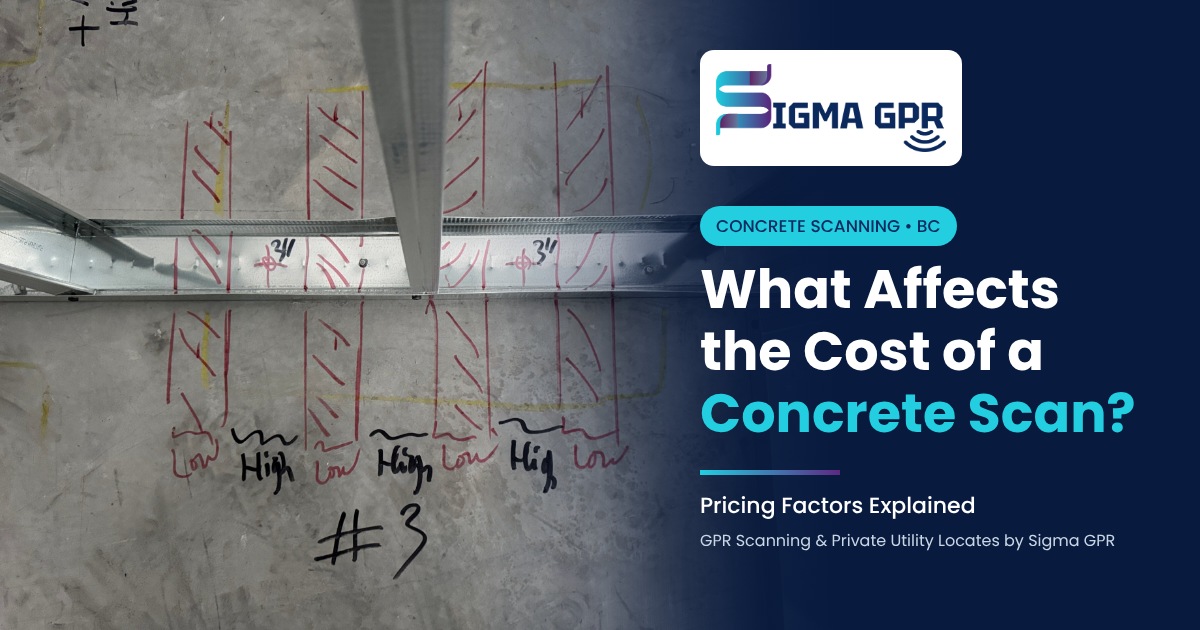
What Affects the Cost of a Concrete Scan?
The cost of a concrete scan is mostly set by one thing: how long the technician spends on site. Two jobs that both say “scan…
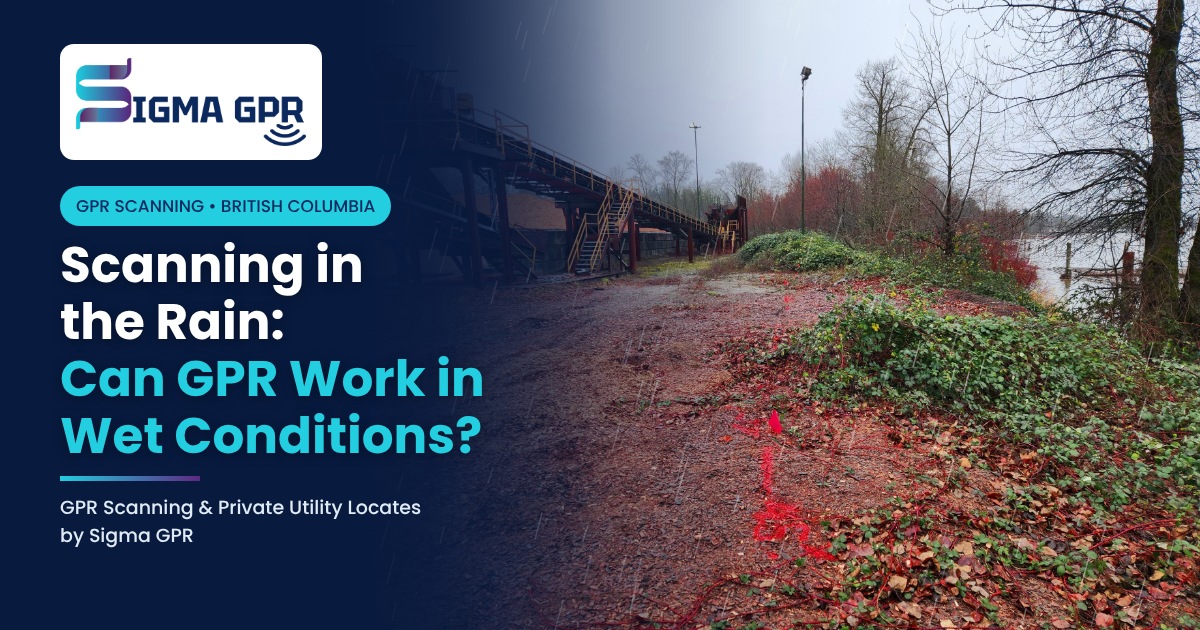
Scanning in the Rain: Can GPR Work in Wet Conditions?
Can GPR work in the rain? Yes, in most cases. Ground penetrating radar works through wet concrete and damp ground every day on BC job…
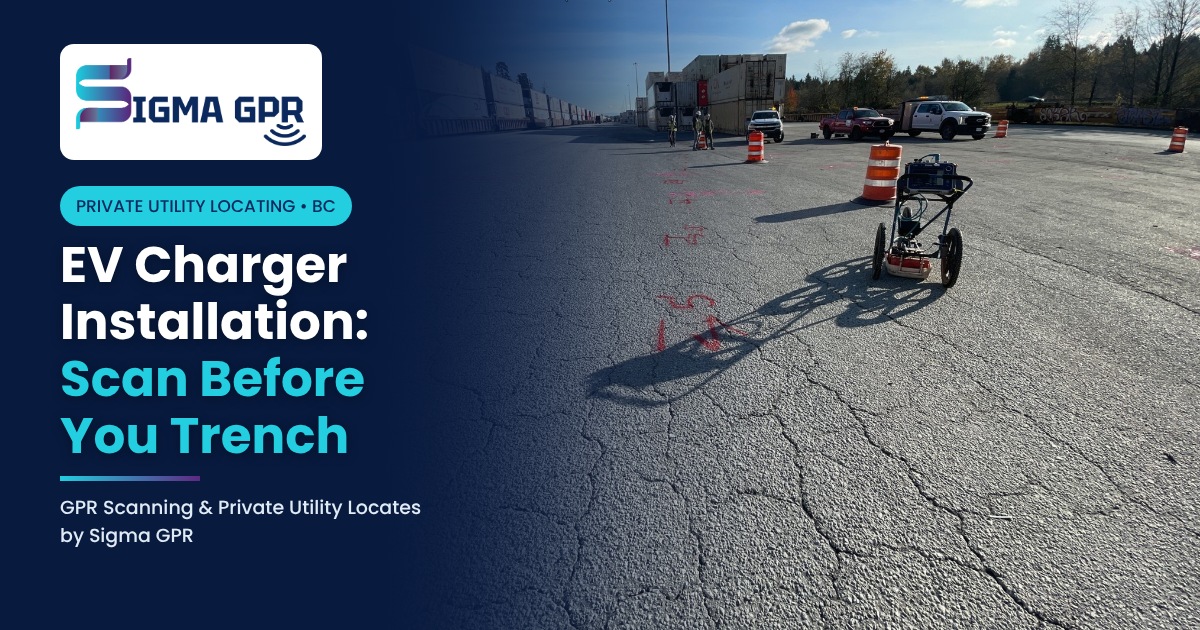
EV Charger Installation: Scan Before You Trench
EV charger installation looks simple on the drawings: a panel, a charger and a run of conduit between them. In practice, that conduit often goes…
How Long Does a GPR Scan Take?
How long does a GPR scan take? For most jobs, one to a few hours on site. A single core location can be done quickly,…
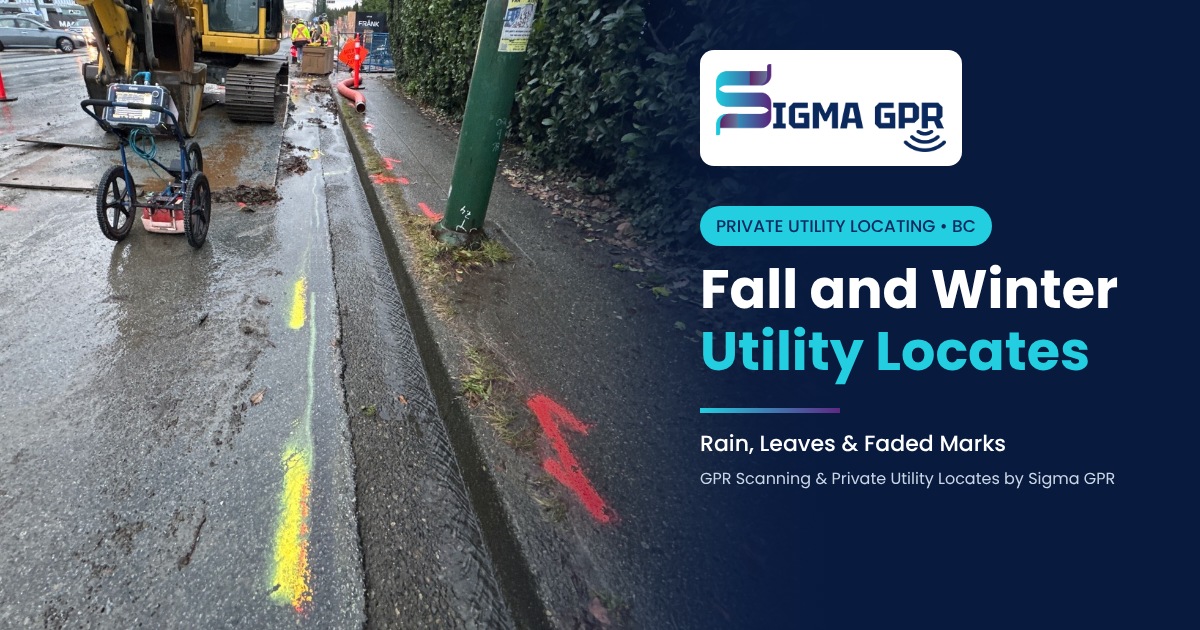
Fall and Winter Utility Locates: Rain, Leaves and Faded Marks
In BC, digging doesn’t stop when the weather turns. Foundations, service connections and road work carry on through the wet months. But fall and winter…
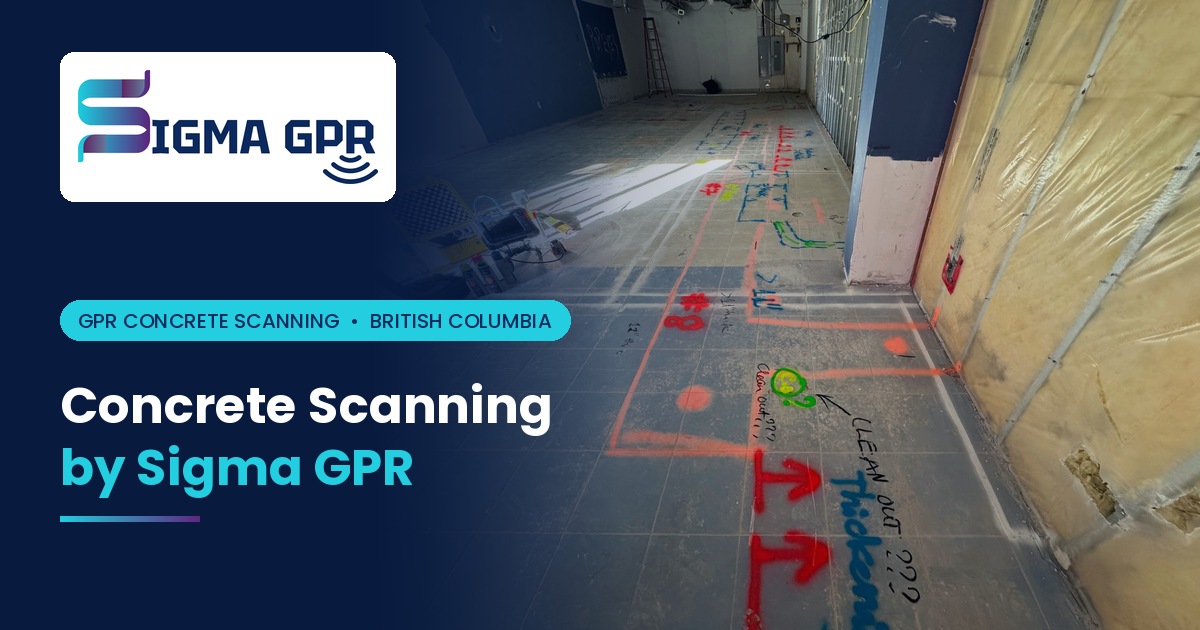
Concrete Scanning in BC: Why Every Core Needs a Scan
A concrete scan usually takes a few hours. Hitting a post-tension cable, a live conduit or a main structural bar can stop a job for…
BC 1 Call vs Private Utility Locating: Do You Need Both?
If you are digging anywhere in British Columbia, the first step is always a BC 1 Call request. But many contractors and homeowners are surprised…